Independent web design studio

Websites that help the right customers choose you.

Custom websites for new ventures and established brands—designed to build trust, clarify what sets you apart, and turn attention into action.

Preview a live client site

Live client work · 3 of 5

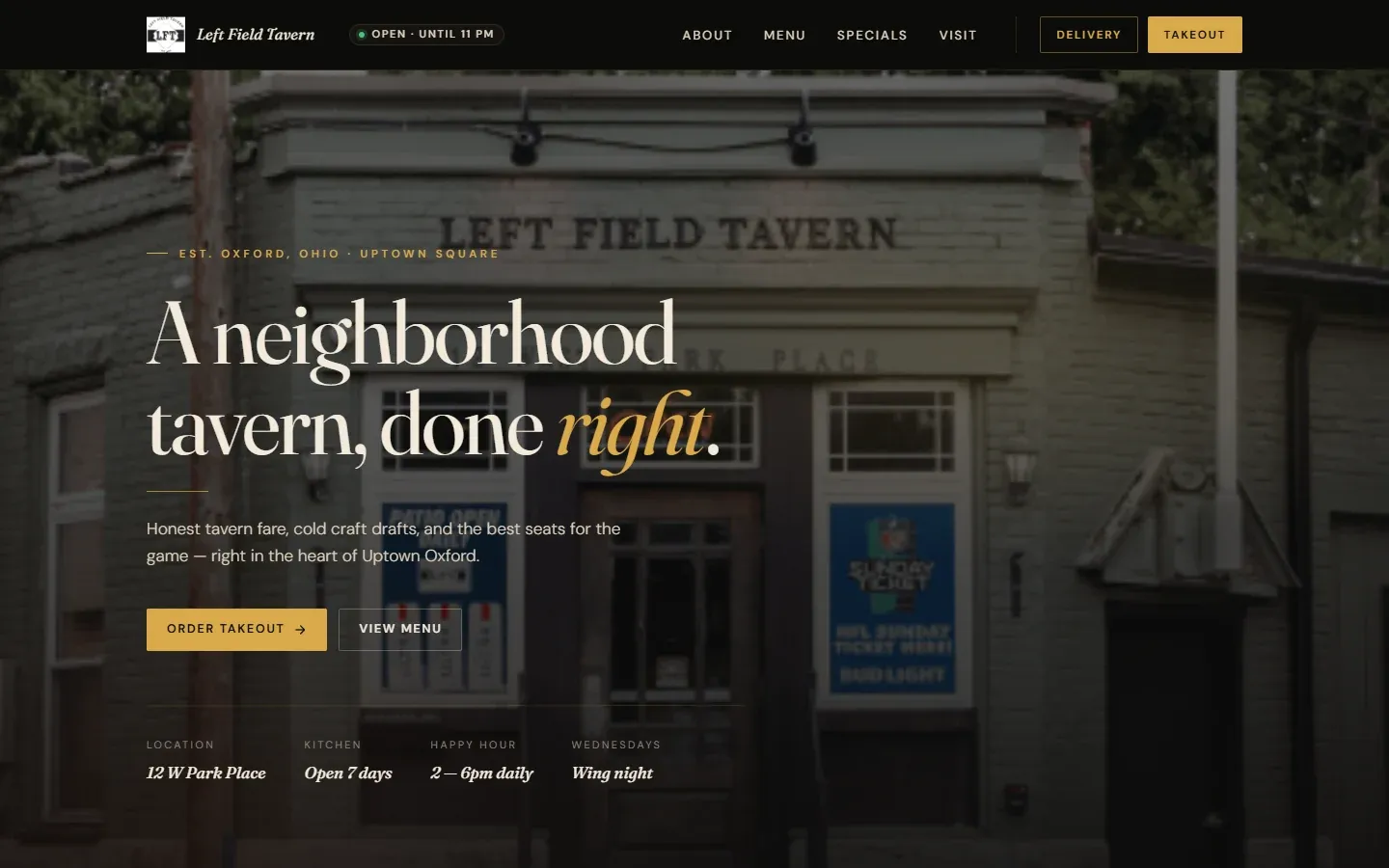
Left Field Tavern homepage — a photograph of the tavern's painted brick exterior behind the headline "A neighborhood tavern, done right", with takeout and menu buttons and a row listing location, kitchen hours, happy hour, and wing night.
Left Field Tavern — Restaurant & bar
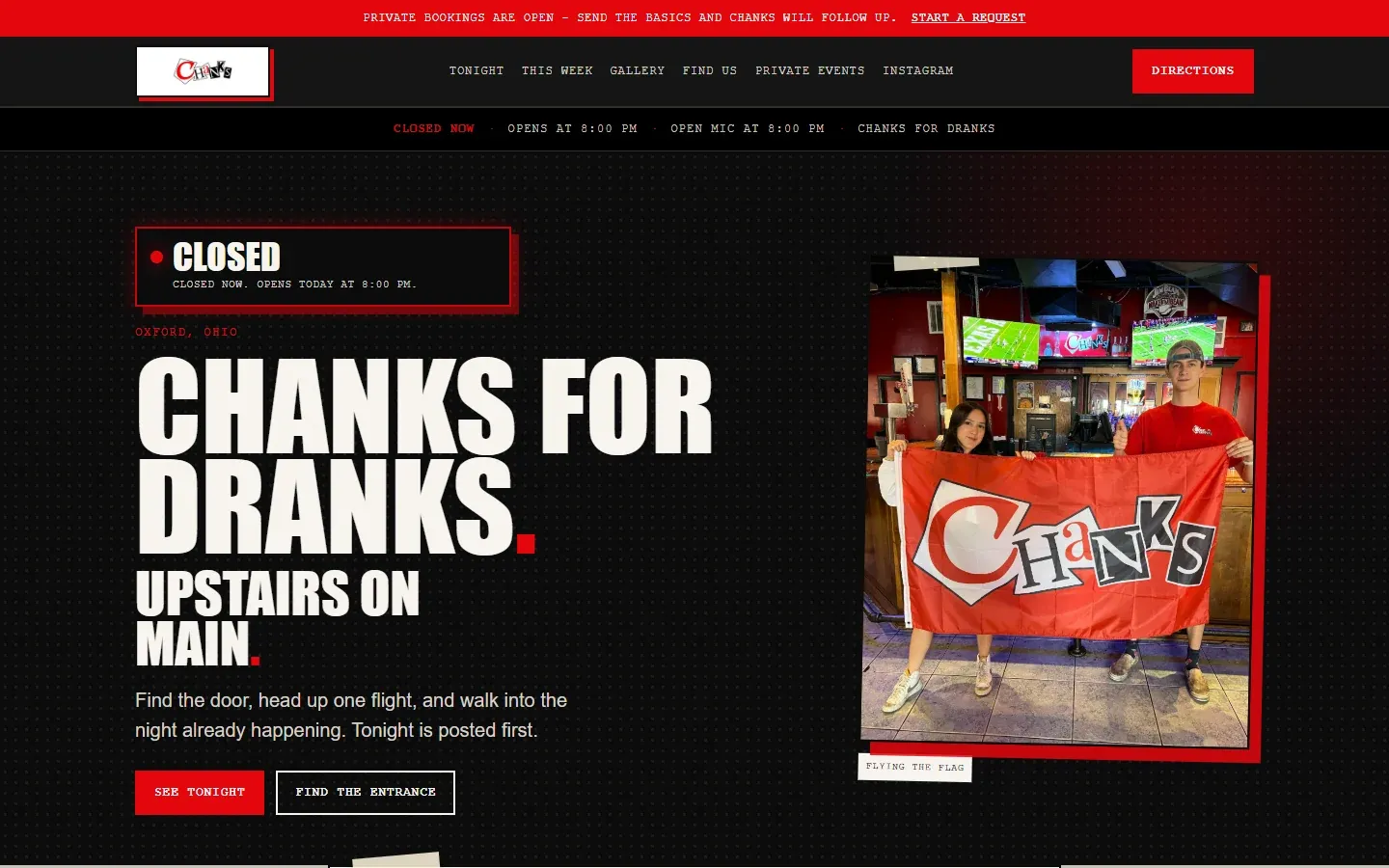
Chanks homepage — the headline "Chanks for dranks. Upstairs on Main." in heavy condensed type on black, beside a photograph of two staff holding a red Chanks flag in the bar, with a red banner announcing that private bookings are open.
Chanks — Live music & nightlife
Flow State Vintage homepage — "FLOW STATE VINTAGE CLOTHING" set in oversized condensed type across a dark background, beside a tilted photograph of a faded work jacket labelled "In the shop · Spring".
Flow State Vintage — Vintage clothing retail

Selected work

The proof is the work.

Live client projects across hospitality, nightlife, and retail — every one of them a business with a different job to do.

Live Client Project

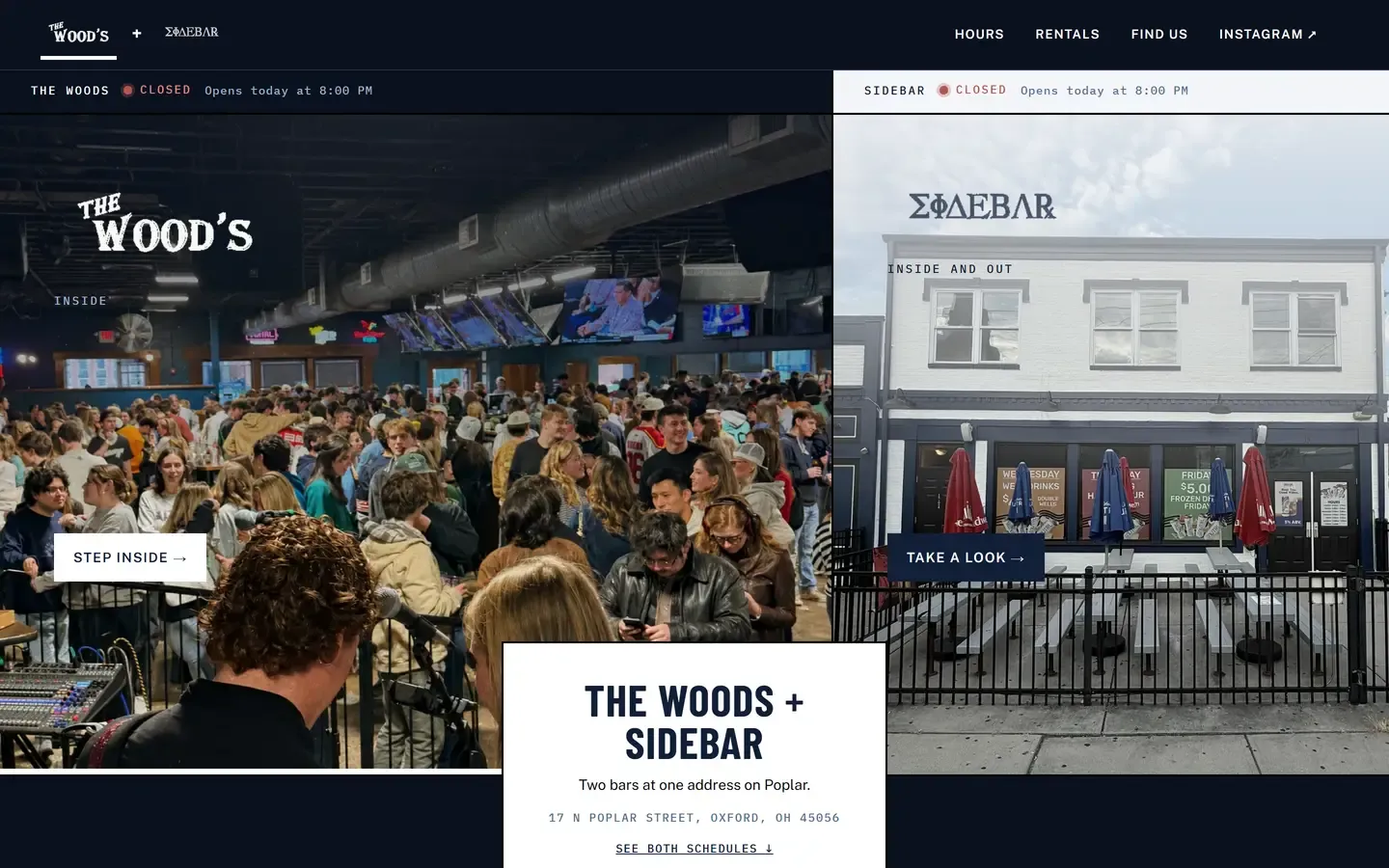
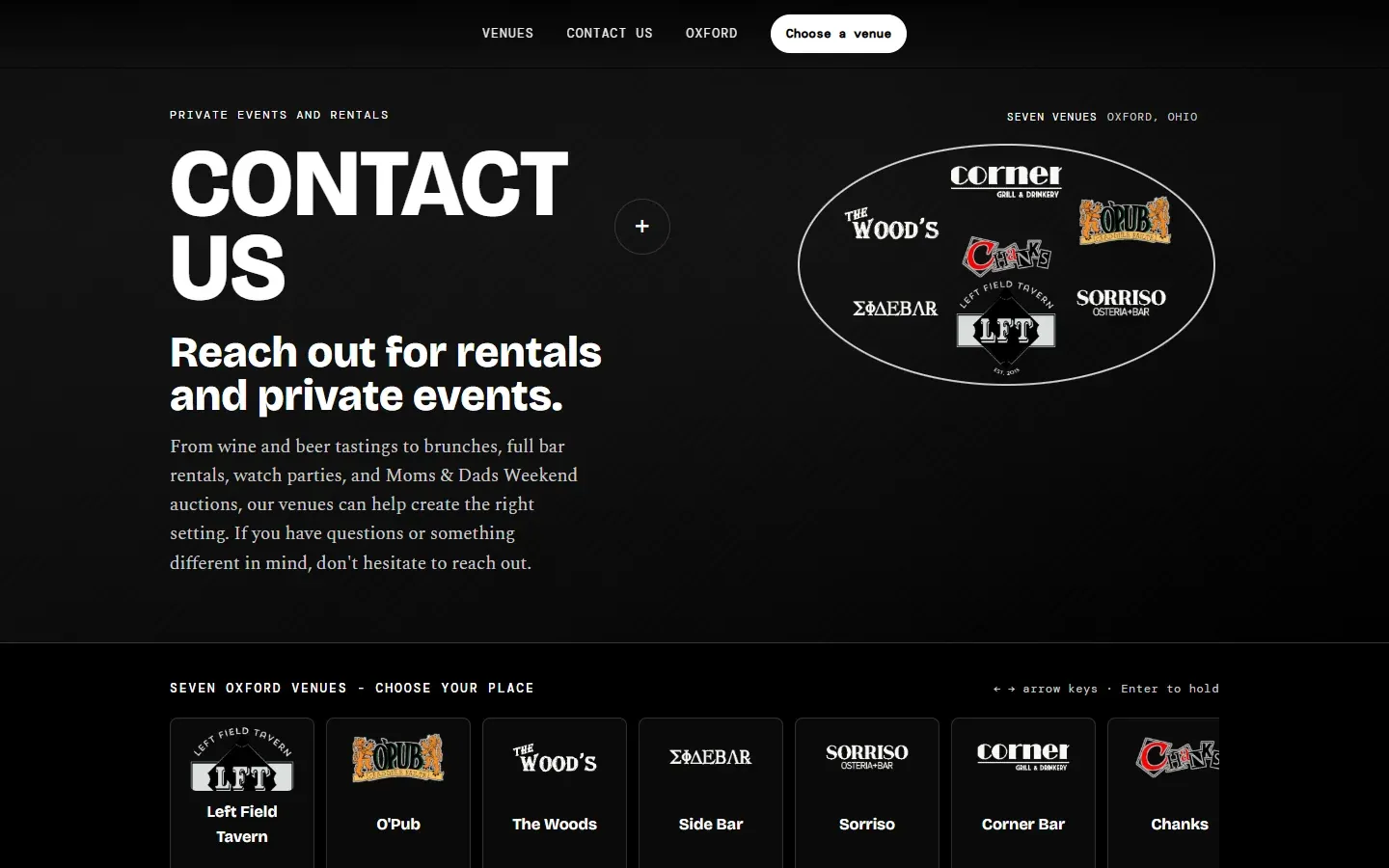
Oxford Bar Group

Hospitality group · Oxford, Ohio

Seven venues under one ownership group, and one site whose job is to send people to the right room. A venue-discovery layer that holds the group together without flattening what makes each place different.

Live Client Project

Chanks

Live music & nightlife · Oxford, Ohio

A bar and music room one flight up from South Main. The site has to find the door for you, then tell you what is happening tonight before anything else.

Live Client Project

Flow State Vintage

Vintage clothing retail · Oxford, Ohio

A curated vintage shop where the inventory is the personality — one-of-one pieces that would disappear inside a standard storefront grid. The site sells the room, not a catalogue.

Capabilities

Everything a launch needs, one pair of hands.

First website or fifth — no departments, no handoffs. Strategy through support, done by the person you hired.

Strategy & positioning
What the site must accomplish, for whom, and how it earns the inquiry — decided before a single pixel.
Design & art direction
An identity that matches how the business actually feels in person. Not a theme with your logo dropped in.
Development & performance
Hand-built, fast, and accessible. Works on the phone in a customer's hand before anything else.
Launch & ongoing support
Deployment, training, and a direct line to the person who built it — for as long as you run it.
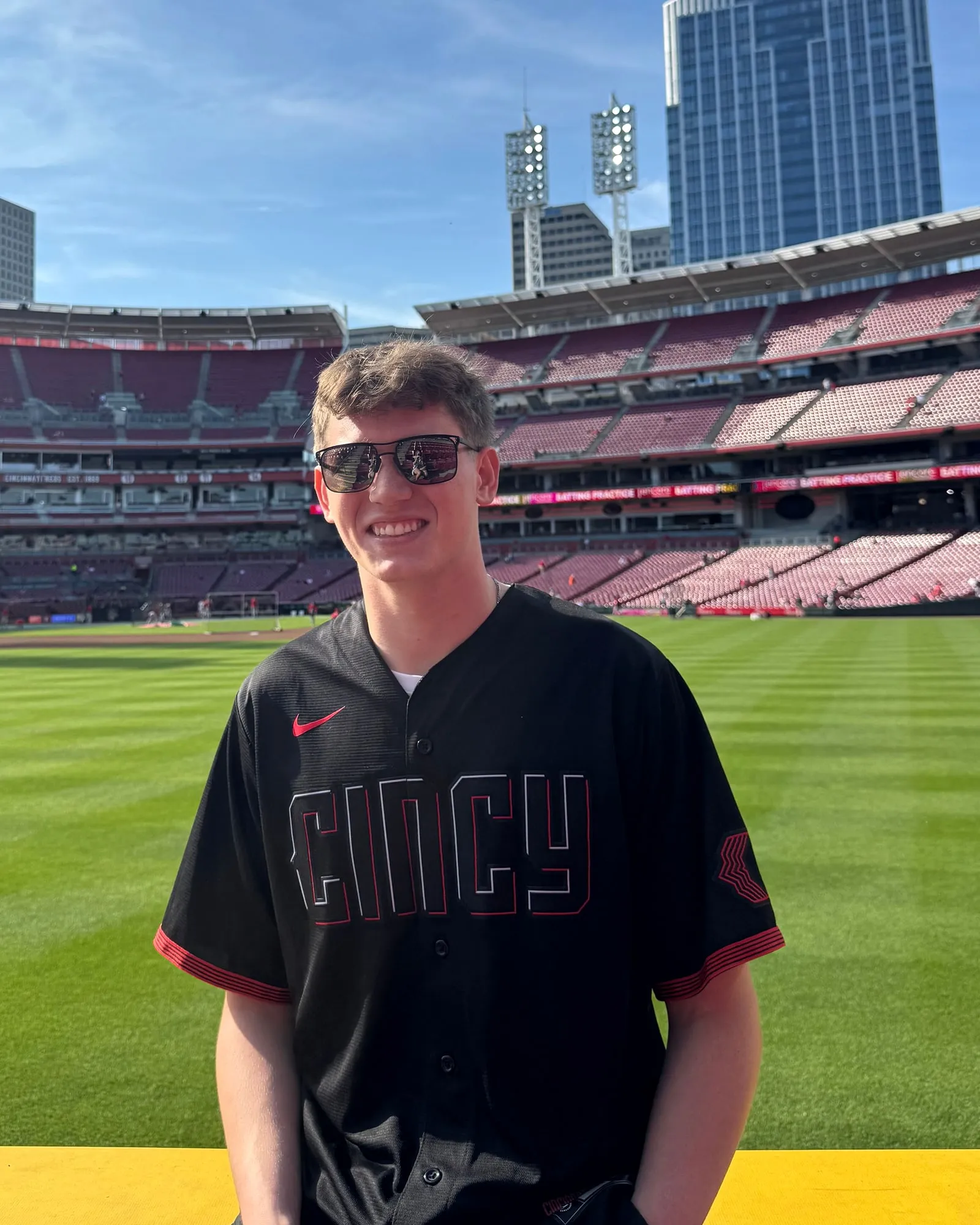
Nick Bibelhausen, founder of Bibelhausen Digital, standing on the field at the Cincinnati Reds' ballpark in a Cincy jersey and sunglasses, with the downtown skyline behind him.
Nick Bibelhausen — Cincinnati, where the studio is from.

The founder

Direct founder attention. Agency-level standards.

Nick BibelhausenFounder, Designer & Developer

Hi, I'm Nick — the founder, designer, and developer behind Bibelhausen Digital. I work directly with businesses at every stage: new ventures putting a credible presence online for the first time, and established brands that have outgrown the site they have.

Every website is shaped around the business, its customers, and where it's headed — never pulled from a recycled template. When you hire the studio, the person you talk to is the person doing the work.

Direct
You talk to the person doing the work. No account managers, no relay.
Hands-on
Design and code by the same hands, so nothing is lost in translation.
Accountable
One name on the work — and it's on everything you're looking at right now.
Long-term
Sites built to be owned, with support from the person who built them.

Principles

How the studio thinks.

  1. Strategy before decoration.

    Every visual choice traces back to a business reason. If it can't, it goes.

  2. Distinctive, never difficult.

    Memorable is worthless if a customer can't find the hours.

  3. Built for the real business.

    Designed around how your customers actually use you — not how templates assume they do.

  4. Fast where it matters.

    Speed is credibility. Nobody trusts a slow website with their dinner plans.

  5. Clear ownership.

    Your domain, your content, your website. No hostage infrastructure.

  6. Designed to last.

    Web standards over trends — a site that still looks intentional in five years.

Process

Six steps, no mystery.

The same path on every project, visible from day one.

  1. Discover

    A conversation about the business — what's working, what isn't, and what the website has to change.

  2. Define

    Scope, sitemap, and success criteria in plain language, agreed before design starts.

  3. Design

    Art direction and page design you review in the browser, not in a PDF.

  4. Develop

    Hand-built and fast, accessible by default, tested as it's made.

  5. Refine

    Real devices, real content, and detail passes until it holds up.

  6. Launch

    Deployment, handover, and support afterward — from a person, not a ticket queue.

Client feedback

The work continues after launch.

Good collaboration includes listening after the site goes live. If we have worked together, your perspective shapes how the studio gets better — and gives the next business a clearer view of what the work is actually like.

Worked with me? I’d value your feedback.

For past clients and collaborators — not a project inquiry. If you are here about new work, start a project instead.

Share your feedback

Questions

The things people ask first.

If yours isn't here, ask it — a straight question gets a straight answer.

Do you work with new businesses as well as established ones?

Yes — businesses at every stage. That includes new ventures putting a credible presence online for the first time, and established brands that have outgrown the site they have. What matters is that the website has a real job to do.

Can you redesign a website I already have?

Yes. A redesign keeps what is already working and fixes what isn't — clarity, visual quality, speed, behaviour on a phone, and how easily a customer can do the thing they came to do.

Is every website custom?

Yes. Each site is shaped around the business, its customers, its goals, and its actual content. Nothing is dropped into a stock theme and refilled with your words.

How does a project start?

With a conversation about the business: who it serves, what the current site does or doesn't do, and what the new one has to accomplish. Scope, priorities, and next steps are agreed in plain language before any work begins.

How long does a website take?

It depends on size, content, features, and how quickly feedback comes back. A realistic schedule is set during planning for your project specifically, rather than quoting the same number to every business.

How is pricing worked out?

From the scope: complexity, how much content needs creating or reworking, and what support you want afterwards. Every proposal spells out what's included before anything starts.

Will it work properly on phones and tablets?

Yes. Responsive layout, performance, and accessibility are part of designing and building the site — not a pass at the end. Most people will meet your business on a phone first.

Can you help after the site launches?

Yes. Updates, support, and later improvements can be part of the plan, and you deal with the person who built the site rather than a ticket queue.

Launching something new, or ready for better than what you have? Let's talk about it.